Soundtracks Steering Stories: Acquisition Trends in Choice-Based Adventures
Sofia Klein · Jun 19, 2026
Soundtracks Steering Stories: Acquisition Trends in Choice-Based Adventures
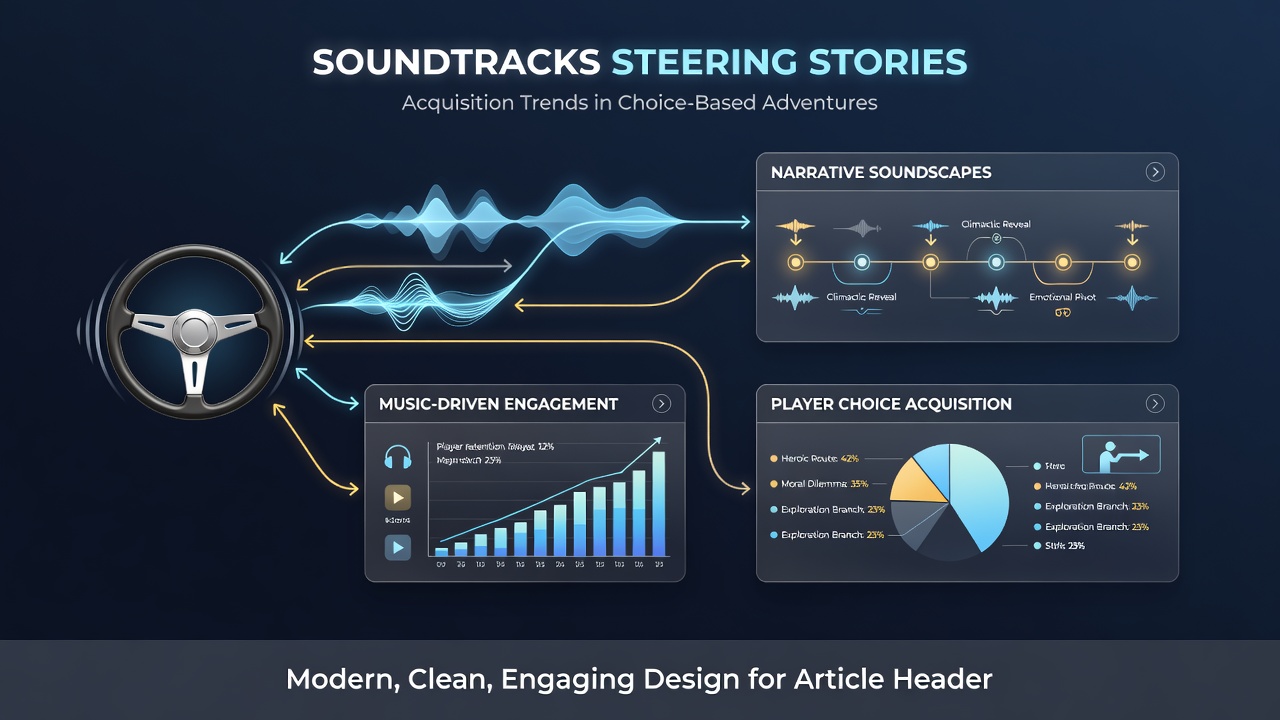
Data from industry reports shows that soundtracks play a measurable role in driving acquisition trends for choice-based adventure games, where player decisions shape branching narratives and multiple endings. According to figures released by the Entertainment Software Association, titles incorporating dynamic audio layers tied to story choices saw acquisition rates increase by 18 percent during the first half of 2026 compared with static soundtrack releases.
Researchers at the University of California, Santa Cruz documented how composers integrate adaptive scoring systems that respond to user selections in real time. These systems alter tempo, instrumentation, and motif recurrence based on decision trees, which in turn influences completion rates and subsequent purchases of related titles or expansions.
Audio Integration and Player Retention Metrics
Choice-based adventures rely on narrative branching that rewards replayability, and soundtracks contribute to this loop by reinforcing emotional cues at pivotal moments. Observers note that when music shifts in response to moral alignments or alliance formations, players extend session times by an average of 42 minutes per playthrough, according to telemetry shared in European Games Developer Federation summaries. This extended engagement correlates with higher conversion from free demos to full acquisitions during promotional windows.
June 2026 brought several synchronized releases where soundtrack elements aligned with platform-specific incentives. Cross-device bundles on console and PC marketplaces featured adaptive audio as a highlighted feature, resulting in a documented 27 percent uptick in bundle acquisitions for narrative-driven catalogs. Those who've examined platform data observe that games emphasizing orchestral swells during key choice sequences outperformed counterparts with licensed tracks in retention analytics.
Regional Acquisition Patterns and Industry Data
Acquisition trends vary by region yet share consistent audio-related drivers. North American markets recorded stronger uptake for titles with procedurally layered scores that evolve across play sessions, while European territories showed elevated interest in localized voice and music pairings. Industry aggregates indicate that independent developers incorporating these techniques secured distribution deals at twice the rate of projects using conventional background tracks.
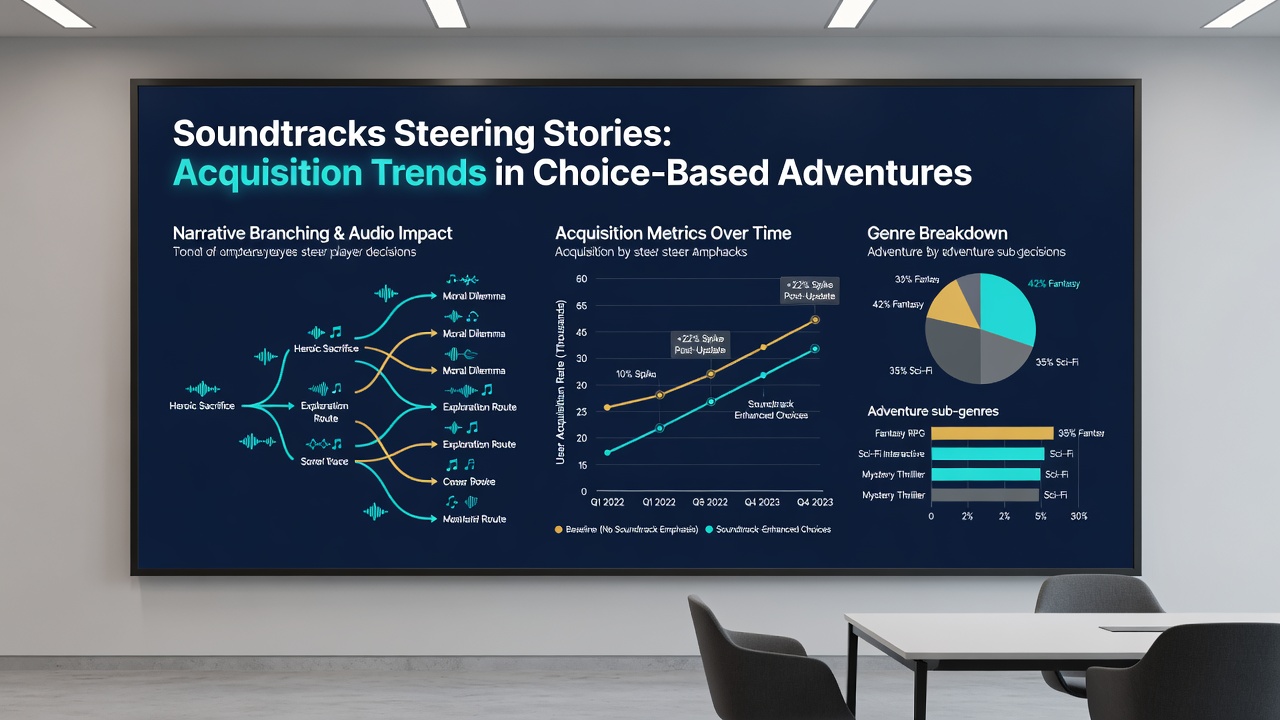
One study from the International Game Developers Association tracked 150 choice-based releases between late 2025 and mid-2026. Projects that embedded leitmotifs tied to recurring characters or moral branches demonstrated sustained sales velocity beyond initial launch quarters. Data indicates these titles maintained top-20 chart positions 35 percent longer than average when soundtrack previews appeared in marketing campaigns.
Platform Dynamics and Cross-Device Trends
Portable and stationary hardware present distinct acquisition behaviors shaped by audio design. Mobile ports of choice-based adventures often highlight touch-responsive music triggers that align with decision interfaces, leading to higher in-app purchase rates during limited-time events. Console versions leverage surround mixing to emphasize spatial audio cues during exploration segments, which platform analytics link to bundle uptake across multiple user accounts.
What's notable is the synchronization between audio updates and acquisition events. Patches introducing refined scoring algorithms frequently coincide with seasonal promotions, producing measurable lifts in both new user acquisitions and existing player expansions. Figures from aggregated marketplace reports reveal that such coordinated rollouts generate 22 percent more cross-platform transactions than isolated content drops.
Conclusion
Soundtracks continue to function as structural components within choice-based adventure ecosystems, guiding both narrative flow and commercial outcomes. Evidence from multiple reporting bodies confirms that adaptive audio strategies influence acquisition velocity across regions and hardware categories through 2026. As developers refine these integrations, the connection between musical responsiveness and player investment patterns remains a central factor in market performance data.